




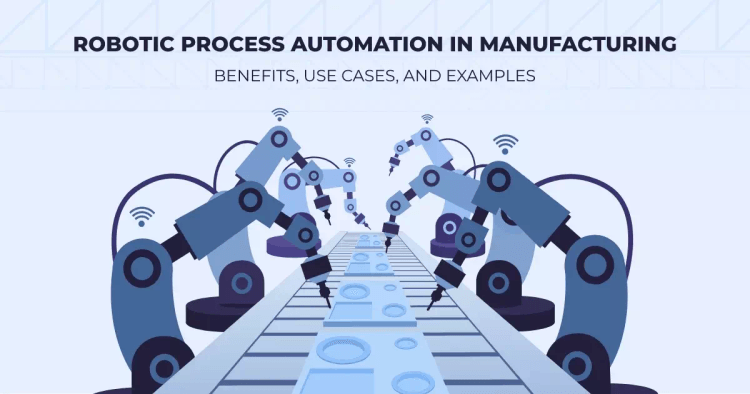

The manufacturing industry is undergoing a massive digital transformation. With rising operational costs, supply chain complexities, and increasing customer expectations, manufacturers are under constant pressure to improve efficiency while maintaining quality. One of the most impactful technologies driving this change is Robotic Process Automation (RPA). By automating repetitive, rule-based tasks, RPA enables manufacturers to streamline operations, reduce errors, and unlock new levels of productivity.
What is RPA in Manufacturing?
Robotic Process Automation (RPA) refers to the use of software bots that mimic human actions to perform repetitive digital tasks. These bots can interact with existing systems, enter data, process transactions, generate reports, and manage workflows without human intervention.
In manufacturing, RPA acts as a digital workforce that operates 24/7, ensuring accuracy, speed, and consistency across production, procurement, logistics, and administrative processes. Unlike traditional automation, RPA does not require major system changes, making it faster and more cost-effective to deploy.
Key Areas Where RPA Transforms Manufacturing
1. Supply Chain and Inventory Management
RPA plays a critical role in monitoring inventory levels, tracking shipments, and managing supplier data. Bots can automatically update inventory records, generate purchase orders when stock levels fall below thresholds, and reconcile supplier invoices. This reduces stockouts, prevents overstocking, and improves overall supply chain visibility.
2. Production Planning and Scheduling
Manufacturing schedules often involve complex calculations and constant adjustments. RPA can collect data from ERP systems, demand forecasts, and machine availability to assist planners in creating optimized production schedules. When disruptions occur, bots can instantly recalculate schedules, minimizing downtime and improving on-time delivery rates.
3. Quality Control and Compliance
Quality assurance is critical in manufacturing. RPA helps automate data collection from inspection systems, validates compliance reports, and flags deviations in real time. By reducing manual documentation, manufacturers can ensure consistent quality standards while meeting regulatory requirements more efficiently.
4. Finance and Accounting Operations
From invoice processing to accounts reconciliation, RPA significantly reduces manual effort in finance departments. Bots can match invoices with purchase orders, process payments, and generate financial reports with minimal errors. This not only accelerates financial cycles but also enhances audit readiness.
5. Human Resource Management
Manufacturing companies often manage large workforces. RPA can automate HR tasks such as employee onboarding, attendance tracking, payroll processing, and compliance reporting. This allows HR teams to focus on workforce planning and employee engagement rather than administrative workloads.
Benefits of RPA in Manufacturing
1. Increased Efficiency and Productivity
RPA bots operate 24/7 without fatigue, completing tasks faster and more accurately than manual processes. This leads to higher throughput and improved operational efficiency.
2. Cost Reduction
By reducing manual labor and minimizing errors, manufacturers can significantly cut operational costs. RPA also helps avoid expensive rework caused by data inconsistencies or process delays.
3. Improved Accuracy and Compliance
Automation eliminates human error in data handling and ensures standardized processes. This is especially important for compliance-heavy industries such as automotive, pharmaceuticals, and electronics manufacturing.
4. Scalability and Flexibility
RPA solutions can easily scale up or down based on production demand. During peak seasons, additional bots can be deployed without hiring or training new staff.
5. Faster Decision-Making
With real-time data collection and reporting, leadership gains better visibility into operations. This enables quicker, data-driven decisions that enhance overall business agility.
RPA and Industry 4.0
RPA is a foundational pillar of Industry 4.0, working alongside technologies like IoT, AI, and advanced analytics. While IoT captures real-time data from machines and sensors, RPA ensures that this data flows seamlessly across enterprise systems. When combined with AI, RPA evolves into intelligent automation—capable of handling complex decision-making and predictive maintenance scenarios.
For example, an AI model may detect potential equipment failure, and RPA can automatically trigger maintenance requests, update inventory for spare parts, and notify technicians—creating a fully automated response loop.
Challenges in RPA Adoption
Despite its advantages, implementing RPA comes with challenges. Poorly defined processes, lack of change management, and insufficient governance can limit ROI. It is essential for manufacturers to standardize processes before automation and ensure employees are trained to work alongside digital bots.
Cybersecurity is another consideration, as bots often access critical systems. Proper access controls, monitoring, and governance frameworks are essential for secure deployment.
The Future of RPA in Manufacturing
The future of RPA in manufacturing lies in hyperautomation—where RPA, AI, machine learning, and advanced analytics work together to automate end-to-end processes. As factories become smarter, RPA will play a central role in enabling autonomous operations, predictive maintenance, and intelligent supply chains.
Manufacturers that invest early in RPA will gain a competitive advantage by improving agility, reducing costs, and enhancing operational resilience. As global competition intensifies, automation will no longer be optional—it will be a strategic necessity.
Conclusion
RPA is transforming the manufacturing industry by eliminating inefficiencies, enhancing accuracy, and enabling smarter decision-making. From production planning to finance and supply chain management, RPA empowers manufacturers to operate faster, leaner, and more efficiently. As digital transformation accelerates, embracing RPA is no longer just about automation—it’s about building a future-ready manufacturing ecosystem that thrives on innovation and efficiency.