





The medical industry has always balanced two demanding priorities: delivering accurate care and doing it at scale. As patient volumes grow and data becomes overwhelming, traditional systems struggle to keep up. This is where Artificial Intelligence (AI) quietly steps in—not as a replacement for doctors, but as a powerful support system that enhances decision-making, efficiency, and patient outcomes.
AI in healthcare isn’t a future concept anymore. It’s already embedded across hospitals, labs, research centers, and even mobile health apps. Let’s explore the most impactful AI use cases transforming the medical industry today.
1. Medical Imaging and Diagnostics
One of the most advanced applications of AI in healthcare is medical imaging. Radiology generates massive amounts of data, and interpreting scans manually takes time and intense focus.
AI algorithms can analyze:
- X-rays, MRIs, CT scans, and ultrasounds
- Tumors, fractures, and abnormalities
- Disease progression across time
By identifying patterns that may be difficult for the human eye to spot, AI assists radiologists in making faster and more accurate diagnoses. Importantly, AI acts as a second set of eyes, reducing diagnostic errors rather than replacing medical professionals.
2. Early Disease Detection and Prediction
AI excels at recognizing subtle patterns in large datasets. This makes it highly effective for early disease detection, often before symptoms become severe.
Common applications include:
- Predicting heart disease risk from patient history
- Detecting early signs of cancer through imaging and lab results
- Identifying patients at risk of diabetes or stroke
Early detection leads to early intervention, which can significantly improve survival rates and reduce long-term treatment costs.
3. Personalized Treatment Plans
Every patient is different. Age, genetics, lifestyle, medical history—all of these influence how treatments work. AI helps tailor treatment plans to individual patients instead of relying on one-size-fits-all approaches.
AI systems analyze:
- Electronic health records (EHRs)
- Genetic data
- Past treatment outcomes
Based on this data, doctors can choose therapies with higher success probabilities and fewer side effects. Personalized medicine improves patient satisfaction and clinical outcomes at the same time.
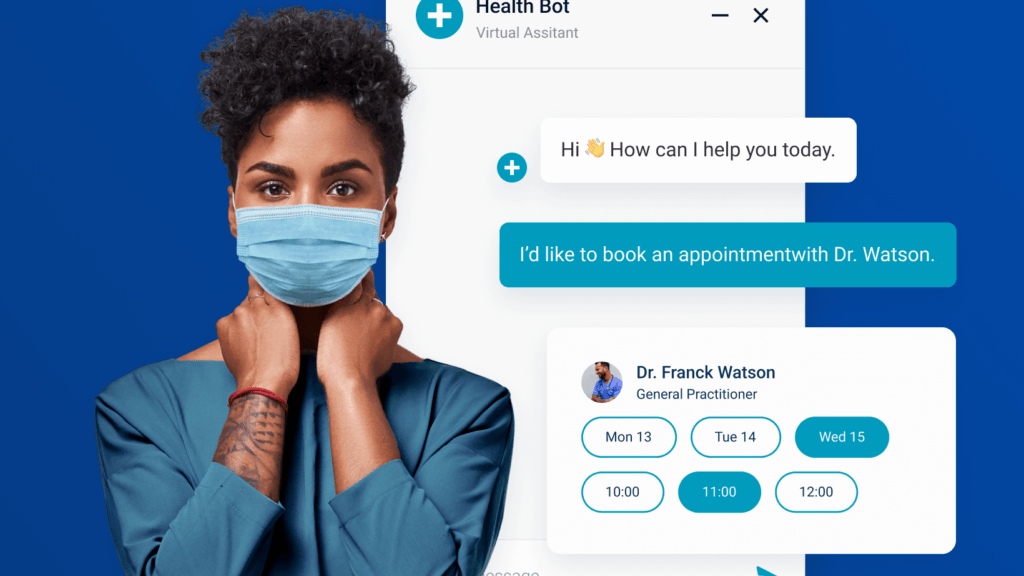
4. Virtual Health Assistants and Chatbots
AI-powered chatbots are becoming a frontline interface in healthcare. They don’t replace doctors, but they significantly reduce administrative burden.
These assistants can:
- Answer common medical questions
- Help patients schedule appointments
- Send medication reminders
- Perform basic symptom checks
This improves patient engagement while allowing medical staff to focus on complex cases that require human expertise.
5. Drug Discovery and Medical Research
Traditional drug discovery is expensive, slow, and uncertain. AI dramatically accelerates this process by analyzing chemical compounds, biological data, and clinical trial results.
AI helps researchers:
- Identify promising drug candidates
- Predict how drugs interact with the human body
- Reduce failed trials
- Shorten development timelines
What once took years can now be narrowed down in months, potentially saving millions in research costs and bringing life-saving drugs to market faster.
6. Administrative Automation in Hospitals
Healthcare professionals spend a surprising amount of time on paperwork. AI helps automate administrative tasks that don’t require clinical judgment.
Use cases include:
- Medical coding and billing
- Insurance claim processing
- Patient record updates
- Appointment scheduling
Reducing administrative workload improves efficiency, lowers operational costs, and helps prevent burnout among healthcare workers.
7. Predictive Analytics for Patient Care
AI-powered predictive analytics helps hospitals move from reactive to proactive care. By analyzing historical and real-time data, AI can predict potential health events before they occur.
Examples include:
- Identifying patients likely to be readmitted
- Predicting ICU demand
- Monitoring deterioration in chronic patients
This allows hospitals to allocate resources better and intervene early, improving patient safety and outcomes.
8. Remote Monitoring and Telemedicine
With the rise of wearable devices and remote care, AI plays a crucial role in monitoring patients outside hospital walls.
AI systems can:
- Track vital signs in real time
- Detect anomalies and trigger alerts
- Support virtual consultations with data-driven insights
This is especially valuable for chronic disease management, elderly care, and post-surgical recovery.
9. Robotic Surgery and Assistance
AI-enhanced robotic systems support surgeons by offering precision, stability, and real-time data analysis. While surgeons remain in control, AI assists with planning and execution.
Benefits include:
- Smaller incisions
- Reduced recovery time
- Lower risk of complications
Robotic assistance is steadily improving surgical outcomes in complex procedures.
Challenges and Ethical Considerations
Despite its benefits, AI in healthcare comes with challenges:
- Data privacy and security concerns
- Bias in training data
- Regulatory compliance
- The need for transparency in AI decisions
Responsible implementation is essential to ensure trust, safety, and fairness.
Final Thoughts
AI is reshaping the medical industry in meaningful, practical ways. From diagnostics and personalized treatment to hospital management and drug discovery, its impact is already visible.
What makes AI especially powerful in healthcare is not automation alone, but augmentation. It strengthens human expertise rather than replacing it. As technology matures and regulations evolve, AI will continue to push healthcare toward a future that is more accurate, accessible, and patient-centered.