




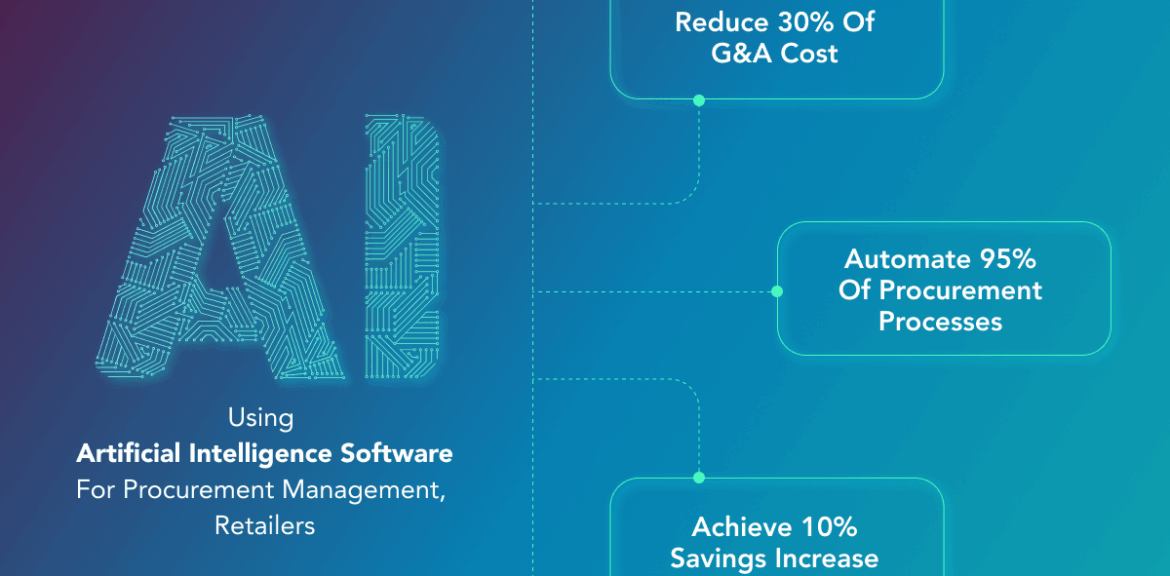

Procurement has evolved far beyond manual purchasing and vendor coordination. In today’s digital-first organizations, Artificial Intelligence (AI) is transforming procurement into a strategic, data-driven function. From supplier discovery to spend analysis and risk management, AI is reshaping how businesses source, negotiate, and manage goods and services.
Understanding AI in Procurement
AI in procurement refers to the use of machine learning, natural language processing, predictive analytics, and automation to improve purchasing decisions and processes. Unlike traditional rule-based systems, AI learns from historical data, identifies patterns, and continuously improves outcomes.
Procurement teams handle large volumes of data—supplier information, contracts, invoices, market prices, and demand forecasts. AI excels at processing this data at scale, enabling faster decisions, reduced costs, and improved supplier relationships.
Supplier Discovery and Evaluation
One of the earliest stages of procurement is identifying and evaluating suppliers. Traditionally, this involved manual research, spreadsheets, and subjective assessments. AI has significantly improved this process.
AI-powered systems can scan thousands of supplier profiles, databases, and external sources to identify potential vendors that meet specific criteria such as pricing, quality standards, delivery performance, and compliance requirements. Machine learning models score suppliers based on historical performance and risk factors, helping procurement teams make more informed and objective decisions.
This not only speeds up supplier selection but also reduces bias and uncovers suppliers that may have been overlooked using traditional methods.
Spend Analysis and Cost Optimization
Spend analysis is a critical but time-consuming task in procurement. AI automates the classification and analysis of spend data across categories, departments, and vendors.
AI tools can:
- Identify spending patterns and anomalies
- Highlight areas of maverick or unnecessary spending
- Recommend cost-saving opportunities
- Forecast future procurement needs
By providing real-time insights, AI enables procurement leaders to negotiate better contracts, consolidate suppliers, and optimize budgets. This shifts procurement from reactive cost control to proactive financial strategy.
Demand Forecasting and Planning
Accurate demand forecasting is essential for efficient procurement. Overestimating demand leads to excess inventory, while underestimating it causes shortages and operational disruptions.
AI improves forecasting by analyzing historical purchasing data, seasonal trends, market conditions, and external factors such as economic changes or supplier constraints. These predictive models continuously adapt as new data becomes available, resulting in more accurate procurement plans.
Better forecasting allows procurement teams to place timely orders, negotiate volume discounts, and align purchasing with production and sales requirements.
Intelligent Contract Management
Procurement involves managing large volumes of contracts with complex terms, pricing structures, and compliance clauses. AI simplifies contract management by extracting, organizing, and analyzing contract data.
Using natural language processing, AI can:
- Automatically extract key clauses and obligations
- Identify risks such as unfavorable terms or expiring contracts
- Flag compliance issues and renewal deadlines
- Compare contracts to ensure standardization
This reduces legal risks, improves contract visibility, and ensures that organizations fully realize the value of negotiated agreements.
Automation of Purchase-to-Pay (P2P) Processes
AI plays a major role in automating the purchase-to-pay cycle, which includes requisitions, purchase orders, invoice processing, and payments.
AI-powered systems can automatically validate purchase requests, match invoices with purchase orders and receipts, detect errors or fraud, and approve payments based on predefined policies. This significantly reduces manual intervention and processing time.
The result is faster cycle times, fewer errors, improved cash flow management, and stronger compliance with procurement policies.
Supplier Risk Management
Global supply chains are increasingly complex and vulnerable to disruptions. AI helps procurement teams proactively manage supplier risk.
By analyzing data from news sources, financial reports, geopolitical developments, and supplier performance metrics, AI can identify early warning signs of risk such as financial instability, delivery delays, or regulatory issues. Procurement teams receive alerts and recommendations, allowing them to take preventive actions like diversifying suppliers or adjusting sourcing strategies.
This predictive approach enhances supply chain resilience and reduces the impact of unexpected disruptions.
Enhancing Negotiation and Decision-Making
AI supports procurement negotiations by providing data-backed insights. It can analyze historical pricing, market benchmarks, and supplier behavior to recommend negotiation strategies and target pricing.
Some AI tools simulate negotiation scenarios, helping procurement professionals understand trade-offs and outcomes before engaging with suppliers. This strengthens negotiation outcomes and ensures decisions are grounded in data rather than intuition alone.
Benefits of AI in Procurement
The adoption of AI in procurement delivers clear advantages:
- Improved efficiency: Automation reduces manual workload and cycle times
- Cost savings: Better insights lead to smarter purchasing decisions
- Risk reduction: Early detection of supplier and compliance risks
- Data-driven decisions: AI turns procurement data into actionable intelligence
- Scalability: Procurement operations can grow without proportional increases in staff
The Future of AI in Procurement
As AI continues to mature, its role in procurement will expand beyond automation into strategic decision-making. Integration with advanced analytics, conversational AI, and autonomous procurement systems will further enhance speed, accuracy, and agility.
In the future, procurement teams will rely on AI not just to execute tasks, but to guide sourcing strategies, strengthen supplier ecosystems, and drive long-term value. Organizations that embrace AI in procurement today position themselves for greater resilience, competitiveness, and sustainable growth tomorrow.