




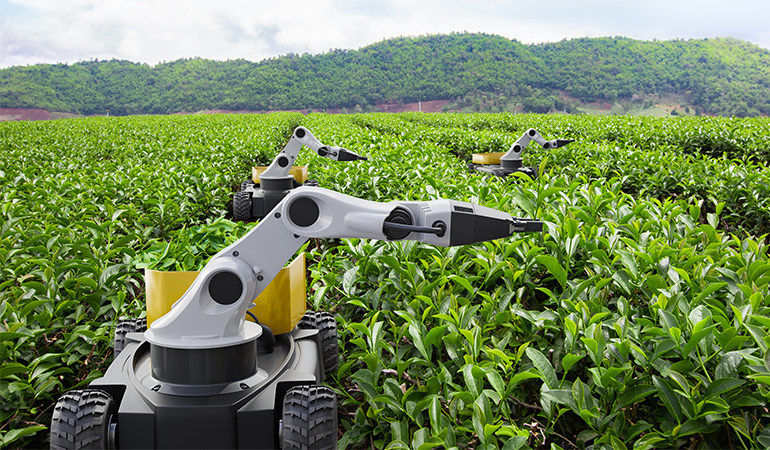

The entrance of technology has greatly transformed farming, and AI in agriculture is primarily being adopted. Agriculture is a crucial occupation in many countries and is under pressure to produce more food as the global population grows. It is estimated that food production will need to increase by 60% to meet future demands.
With this goal in mind, farming techniques are evolving. Agriculture scientists are finding the best ways to use AI in agriculture to grow healthier yields.
This blog will give you a whole framework on how artificial intelligence is used in the agriculture sector and changing the landscape.
Market Overview of AI in Agriculture
Artificial intelligence (AI) is significantly transforming agriculture, making farming easier and more efficient. Here are some key statistics showing the impact of AI in agriculture:
- Global spending on smart farming technologies, including AI and machine learning, is expected to triple by 2025, reaching $15.3 billion. (Source: Twenty 20 Solutions)
- The market for the Internet of Things (IoT) and AI in agriculture, specifically for IoT-enabled agricultural monitoring, is projected to be valued at $4.5 billion by 2025. (Source: Invest India)
- Investment in AI in agriculture is forecasted to grow from $1 billion in 2020 to $4 billion by 2026, with an annual growth rate of 25.5%. (Source: Markets And Markets)
- The AI in agriculture market was worth $852.2 million in 2019 and is expected to grow to $8.38 billion by 2030, with an annual growth rate of 24.8% over the forecast period from 2020 to 2030. (Source: PS Market Research)
Challenges Faced by Agriculture Business with AI
Many people think AI is only useful in the digital world, not for physical farming tasks. This belief often comes from not understanding AI tools. Most farmers, especially those in non-tech sectors, don’t fully grasp how AI works, which slows down its adoption in agriculture.
While farming has evolved, many farmers are still more comfortable with traditional methods and have little experience with AI technology.
High Initial Costs
AI solutions can be cost-effective over time, but the initial investment is often very high. Many farms, especially small-scale ones and those in developing countries struggle financially and can’t afford the upfront costs of AI.
However, as technology advances, the costs of implementing AI in agriculture may decrease. Farmers can also explore funding options like private investments or government grants.
Reluctance to Adopt New Technologies
People often resist new technologies out of ignorance, making it hard for farmers to embrace AI despite its clear benefits. This resistance to innovation and fear of new processes can hold back the development and profitability of the agriculture sector.
Farmers need to realize that AI in agriculture is an advanced version of simpler field data processing technologies. To encourage adoption, public and private sectors should provide resources, incentives, and training. Governments also need to create regulations to assure farmers that AI technology is safe.
Lack of Practical Experience
The level of technological advancement in agriculture varies around the world. Some regions can fully benefit from AI, while others face challenges where advanced farming technology is rare. Tech companies looking to enter these emerging markets need to be proactive. Besides offering their products, they should provide training and ongoing support to farmers and agribusiness owners who are ready to adopt innovative solutions.
Lengthy Technologies Adoption Process
Beyond a lack of understanding and experience, the agricultural sector often doesn’t have the infrastructure needed for AI to function effectively. Even farms with some technology in place might struggle to advance further. This is also a challenge for Agriculture technology providers and software companies.
One solution is to introduce farmers to simpler technology first, like an agricultural trading platform. Once farmers are comfortable with this, providers can gradually introduce more tools and features, eventually leading to fully AI-based farms.
Technologies Limitations
AI is still evolving and has its limitations. Accurate AI models need diverse, high-quality data, which can be hard to find in agriculture. Robots with sensors may struggle to adapt to changing farm environments.
Overcoming all of these limitations requires ongoing research and data analysis. Farmers should stay involved in decision-making rather than relying entirely on AI. especially in the early stages of adoption where manual monitoring of AI decisions is beneficial.
Privacy and Security Issues
There are not many regulations governing AI use across industries. AI in agriculture is used for precision farming and smart farming raises various legal concerns.
Security threats like cyber attacks and data leaks can pose serious problems for farmers. It is also possible that AI in the agriculture field could be targeted by hackers aiming to disrupt food supplies.
Benefits of AI in Agriculture Business
Increased Crop Yields
AI in agriculture can help farmers track important data such as soil health, weather conditions, and plant growth. By analyzing the whole data, AI can provide insights into the best times to plant, irrigate, and harvest crops.
For example, AI in agriculture can suggest the optimal amount of water or fertilizer needed, which can significantly enhance crop yields. Precision farming techniques enabled by AI ensure that each plant gets exactly what it needs, reducing waste and maximizing productivity.
Less Pesticide Use
AI technology in Agriculture can detect the presence of pests and diseases early on by analyzing images of crops and identifying patterns that indicate issues. With early detection, farmers can apply pesticides only where needed, rather than spraying entire fields.
This targeted approach not only reduces the amount of pesticides used but also lowers costs and environmental impact. But it also helps in maintaining the health of beneficial insects and soil organisms.
Better Soil Health
AI in agriculture and farming can help continuously monitor soil conditions, including moisture levels, pH, and nutrient content. Real-time monitoring helps farmers understand the exact needs of their soil and crops.
They can then make precise adjustments to irrigation and fertilization practices, promoting healthier soil. Healthier soil, in turn, supports better plant growth and can improve crop growth over time.
Less Water Usage
By analyzing data on weather forecasts, soil moisture, and plant growth stages, AI in agriculture can optimize irrigation schedules.
For instance, if rain is forecasted, the AI system can reduce or skip irrigation, conserving water. Efficient water use not only conserves the vital resource but also reduces the energy costs associated with pumping and distributing water.
More Efficiency
AI can automate many routine farming tasks, such as monitoring crop health, analyzing soil conditions, and predicting growth. Automation of these tasks saves farmers a significant amount of time, allowing them to focus on other critical aspects of their business, like planning, marketing, and sales.
AI in agriculture also reduces the chances of human error, ensuring more accurate data and better decision-making.
Greater Sustainability
AI tools can track and analyze the farm’s use of resources, such as water, energy, and chemicals. By providing insights into how these resources are used, AI helps farmers identify areas where they can reduce waste and improve efficiency.
This leads to more sustainable farming practices, such as reducing greenhouse gas emissions, conserving water, and minimizing the use of harmful chemicals.
Reduced Costs
The automation of tasks like crop monitoring and yield predictions with AI reduces the need for manual labor, which can significantly cut labor costs.
Additionally, AI’s precision can lead to more efficient use of inputs like seeds, fertilizers, and pesticides, further reducing costs. These savings, combined with the efficiency and productivity gains, make farming operations more profitable and sustainable.
Final Thoughts
AI has been taking over many industries. It is helping them to conquer their targets much faster. And now it also has taken over the agriculture sector as well. AI in agriculture is essential for addressing food production challenges posed by the growing population.
The growth of artificial intelligence in agriculture has strengthened the agro sector to run more efficiently than ever. If you are looking for an AI app development company for your brilliant idea, this is the time to bring that idea to life.